

Three Useful Product Settings
Start with a clean studio, a warm cafe table or a restrained botanical display. Choose a setting whose light and surface suit the source product.
- One complete product with sharp edges.
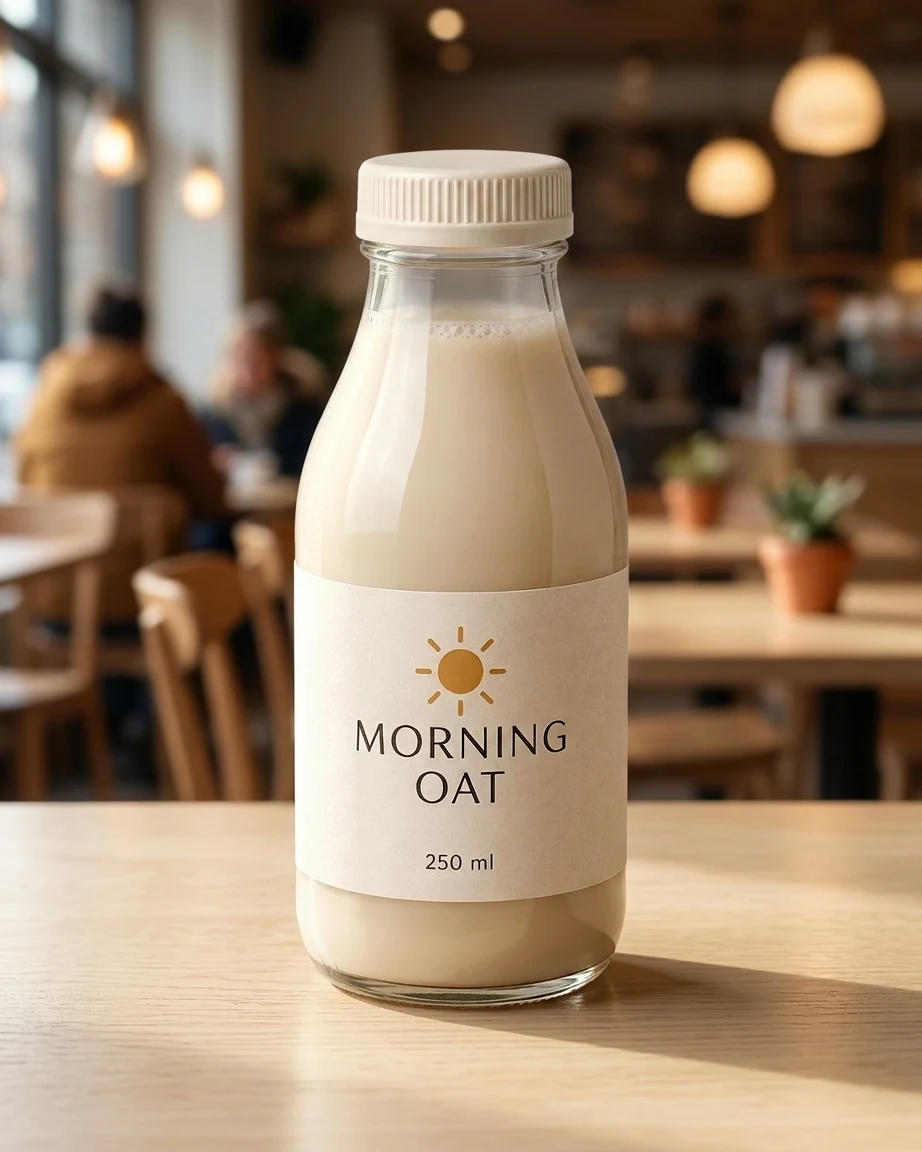
Explore a new setting for a real product photo. Choose a studio, cafe or botanical scene, then compare the product shape, packaging and label with the original.

A focused effect with a clear visual direction and practical review points.
Start with a clean studio, a warm cafe table or a restrained botanical display. Choose a setting whose light and surface suit the source product.

The direction asks for the original packaging, color and visible lettering. The edit can still redraw fine details, so compare every important identifier.
A believable product scene needs contact with the surface and coherent lighting. Review the base, transparent materials and label geometry before using the image.
Review the credit quote before generating.
Keep the cap, base, handles and printed label visible. A readable source label is essential for a useful comparison.
Pick the studio, cafe or botanical scene. Use a source angle that already fits the intended composition.
Review the quote, generate, then compare wording, proportions, edges and shadows with your original before downloading.
Use the finished image or clip in your own creative work.
Compare potential settings for an ecommerce or advertising concept.
Explore a repeated scene direction across several separately uploaded products.
Check the input requirements and review the details that matter.
A generative edit can redraw lettering, logos or small packaging details. Compare the output with the original. If exact visible packaging is required, retain the source product as a separate layer in a compositing editor.
A background remover isolates an item. This tool generates a new scene and its lighting around a reference product, so the product itself also needs careful review.
For a dependable new angle, start from a real photo of that angle. Generation can invent hidden details, and one front-facing image does not establish the actual side or back of a product.
Choose your source photo and review the quote to make a new result.